🗞️ Talking About Your Bonus Can Get You Fired, But Not Legally: A Texas Dental Office Finds Out the Hard Way
The NLRB ordered a Pearland, Texas dental practice to reinstate and compensate a fired employee after finding she was unlawfully terminated for raising workplace concerns and discussing bonuses with coworkers.

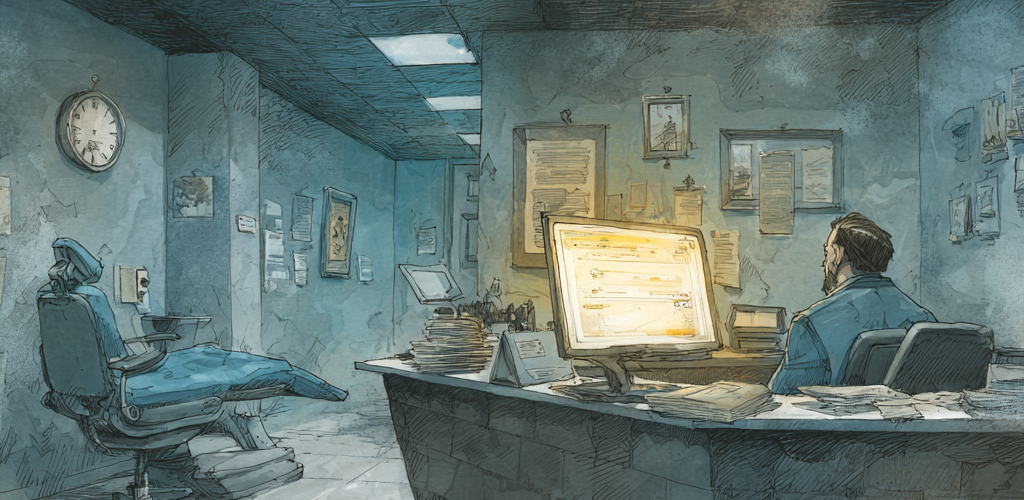
A small dental office in suburban Houston has become the latest private-sector employer to learn that federal labor law extends well beyond unionized workplaces. On June 1, 2026, the National Labor Relations Board affirmed an administrative law judge's ruling that Floss N Gloss PA, operating as Aqua Dental, violated the National Labor Relations Act when it disciplined and terminated front desk employee Sandra Yvette Estrada in October 2022, just 80 days into her employment and still within the office's 90-day probationary period.
The case turned on two acts that might seem unremarkable in most workplaces. First, Estrada helped draft an anonymous email sent to management raising employee concerns about scheduling, pay, and working conditions, issues she had discussed with at least one coworker over after-work happy hours. Second, she initiated a group conversation at the front desk about how the office's bonus structure worked and whether employees in similar roles received comparable amounts.
Management's response was swift and, in the Board's view, legally indefensible. Within four days of the bonus conversation, Estrada received three separate disciplinary actions and was terminated. The stated reasons shifted over time: from a workplace altercation on October 19, to Estrada's failure to "fit the culture," to the anonymous October 10 email, which management characterized as a threatening communication, a characterization the judge found implausible given that no one at the company had confronted Estrada about the email or treated it as a genuine safety concern.
Administrative Law Judge Amita Baman Tracy found the employer's conduct reflected what labor law calls "animus" toward protected activity. The evidence included suspicious timing, disparate treatment compared to other employees disciplined for similar conduct, a failure to meaningfully investigate the underlying complaints, and the employer's own shifting justifications for the termination. Notably, the judge found that the office's operations manager, Misbah Tukdi, had likely suspected Estrada's role in the anonymous email from the day it arrived yet waited until after the bonus discussion to take action.
The Board narrowed the judge's holding, affirming the violation based specifically on the October 10 email, which it found constituted protected concerted activity because at least one coworker had discussed the underlying workplace concerns with Estrada before the email was sent. The Board declined to rule on whether the bonus conversation independently provided a separate legal basis for the violation, though Member Prouty would have upheld both grounds.
One allegation did not survive. The Board dismissed the claim that management had orally prohibited employees from discussing pay. Video evidence of the bonus conversation showed that while Tukdi expressed a preference for addressing individual bonus questions privately rather than at the front desk with patients nearby, he never told employees they could not discuss compensation among themselves.
Under the Board's remedial framework, Estrada is entitled to full reinstatement, back pay, and compensation for other direct and foreseeable financial harms incurred as a result of her termination, a standard established in Thryv, Inc., 372 NLRB No. 22 (2022), which significantly expanded the scope of relief available to workers beyond traditional back pay. That framework, however, remains contested in the courts. The Fifth Circuit, in a separate proceeding, has ruled that the Board exceeded its statutory authority in applying expanded consequential damages, and the Third Circuit reached a similar conclusion in late 2024, setting up a potential Supreme Court confrontation over the Board's remedial powers.
The case is a practical reminder that Section 7 of the NLRA protects employees' rights to discuss wages and working conditions regardless of union membership, a protection that applies to virtually all private-sector workers and that many small employers, and some employees, may not fully appreciate.
Key Points
- Aqua Dental terminated Sandra Estrada on October 24, 2022, her 81st day of employment and still within the office's 90-day probationary period, following a workplace altercation, an anonymous email raising employee concerns that she helped draft, and a group discussion about bonuses at the front desk.
- The NLRB found the termination was motivated by Estrada's protected concerted activity under Section 7 of the National Labor Relations Act, which protects employees' rights to collectively raise workplace concerns and discuss compensation, even in non-union settings.
- Evidence of unlawful motivation included suspicious timing, disparate discipline relative to similarly situated employees, shifting employer justifications, and a failure to meaningfully investigate the underlying conduct before terminating Estrada.
- The allegation that management orally prohibited wage discussions was dismissed; video evidence showed the operations manager preferred private conversations about individual bonuses but never forbade group discussions among employees.
- Aqua Dental was ordered to offer Estrada full reinstatement, make-whole back pay, and compensation for direct and foreseeable financial harms under the expanded Thryv remedy standard.
- The Thryv remedial framework is under active legal challenge; both the Fifth and Third Circuits have ruled the NLRB exceeded its statutory authority in applying expanded consequential damages, raising the prospect of Supreme Court review.
- The Board declined to order a notice reading aloud to employees, mandatory management training, or a written apology to Estrada, finding that traditional posting remedies were sufficient given the scope of the violation.
Primary Source Author: Administrative Law Judge Amita Baman Tracy; affirmed by Chairman James R. Murphy and Members David M. Prouty and Scott A. Mayer
Primary Source: Floss N Gloss PA d/b/a Aqua Dental, 374 NLRB No. 122 (June 1, 2026)
Primary Source Link: https://www.nlrb.gov/case/16-CA-305753
Supplemental Sources
- NLRB: Your Rights Under the NLRA (Section 7 overview)
- NLRB Edge: June 2, 2026 case summary
- Law360: NLRB Upholds Texas Dental Office's Loss in Firing Case
- Littler Mendelson: NLRB Expands Make-Whole Remedy (Thryv analysis)
- Fisher Phillips: Fifth Circuit Rejects NLRB's Expanded Thryv Remedies
- Saul Ewing: Third Circuit Rules NLRB Lacks Authority for Damages Beyond Back Pay
- Foley and Lardner: Employer's Guide to NLRA Section 7 in Non-Union Workplaces