🗞️ Friendship, Not Retaliation, Sealed a Technician's Fate, NLRB Judge Rules
An NLRB judge dismissed a fired medical technician's retaliation complaint against his employer and college fraternity brother, finding a strained friendship and a refused work assignment, not hostility toward protected activity, drove the firing.

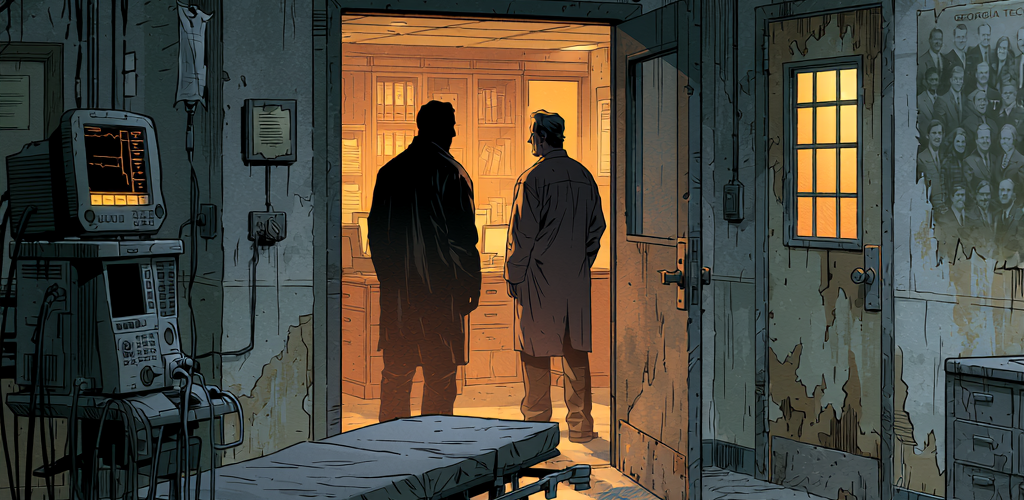
A National Labor Relations Board administrative law judge has recommended dismissal of an unfair labor practice complaint brought by Blake Pierce, a longtime neurophysiological monitoring technician at Syntact, LLC, a small Georgia medical services company. Pierce, who worked for the company for fifteen years, alleged he was fired in February 2025 for relaying coworkers' complaints about scheduling and pay to Syntact's owner, Justin McLoughlin, conduct he said was protected under Section 7 of the National Labor Relations Act. Notably, the case did not involve any union activity or allegation; it centered instead on employees' separate right to act together, or speak on each other's behalf, about workplace conditions.
Judge Keltner W. Locke agreed that Pierce's advocacy for fellow employees counted as protected concerted activity and rejected the company's argument that Pierce's supervisory sounding job title placed him outside the law's protections. But applying the Board's longstanding Wright Line burden shifting framework, a test the Board also uses in ordinary discharge disputes involving no union at all, the judge found no evidence that McLoughlin harbored hostility toward that activity.
Instead, the decision paints a portrait of a friendship strained by business. McLoughlin and Pierce were fraternity brothers at Georgia Tech, and testimony, including from McLoughlin's therapist and his wife and business co owner, Brooke McLoughlin, described McLoughlin's yearslong reluctance to discipline or fire a close friend despite mounting coworker complaints. That reluctance broke, the judge found, after Pierce refused a New Year's Day 2025 emergency surgery assignment in a bluntly worded text message, a turning point McLoughlin's wife said finally convinced her husband a "clean break" was necessary.
The judge concluded the one week gap between Pierce's advocacy on behalf of coworkers and his discharge did not, by itself, establish unlawful motive, particularly given the company's documented performance concerns and the practical need to train a replacement technician. Because the General Counsel of the Board could not show animus was a motivating factor in the decision, the judge recommended the complaint be dismissed in full.
Key Points
- Blake Pierce, a technician at Syntact, LLC since 2010, was discharged in February 2025 after relaying coworker complaints about workload and pay to owner Justin McLoughlin.
- The complaint involved no union activity; it turned on employees' separate right to act together, or speak for each other, about working conditions.
- Judge Locke found Pierce was not a statutory "supervisor" despite his title, so his advocacy for coworkers was protected activity under Section 7 of the Act.
- Applying the Wright Line test, the judge found no evidence of hostility toward that protected activity, the element needed to prove an unlawful motive.
- Testimony showed McLoughlin, Pierce's fraternity brother and longtime friend, had delayed firing him for over a year despite performance complaints from other staff.
- The immediate trigger for the firing was Pierce's refusal of a New Year's Day emergency work assignment, not his relay of coworker grievances.
- The judge declined to draw any adverse inference from the company's alleged incomplete response to a Board subpoena, citing its small size.
- The recommended order dismisses the complaint in its entirety, subject to the Board's standard exceptions process.
Sources
Primary Source Author: Keltner W. Locke, Administrative Law Judge, National Labor Relations Board
Primary Source: Syntact, LLC and Blake Pierce, an Individual, Case 10 CA 371322 (JD 46 26), Bench Decision and Certification, July 23, 2026
Primary Source Link: https://www.nlrb.gov/case/10-CA-371322
Supplemental Links Used in This Analysis
- NLRB explainer on Section 7 and Section 8(a)(1) employee rights
- NLRB news story clarifying the Wright Line burden shifting standard
- Duane Morris LLP analysis of the Wright Line burden in mixed motive cases
- Weinberg, Roger & Rosenfeld overview of the Wright Line burden of proof
- Ballard Spahr summary of the Board's adoption of the Wright Line standard