🗞️ A Decade Later, a Labor Board Case Ends Not on the Merits, but on the Calendar
The NLRB dismissed a long running case against a small Iowa contractor, ruling the union waited too long to sue after the owner said in 2016 he no longer had a contract, even though the underlying labor dispute was never resolved.

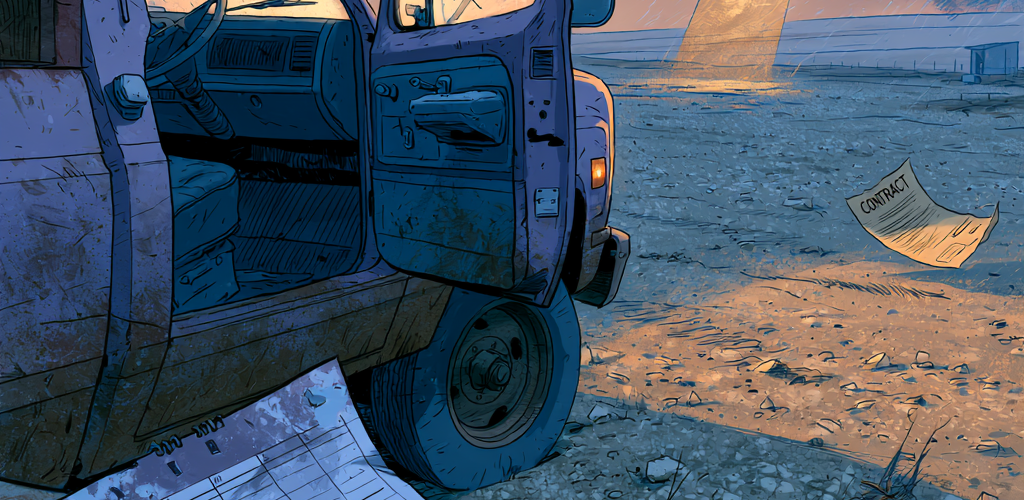
A decade after a construction industry union first clashed with a one man erosion control company in Iowa, the National Labor Relations Board has closed the book on the dispute, not by deciding who was right, but by deciding the union waited too long to complain.
The case traces back to 2007, when Jamie Enright, owner of Enright Seeding, signed agreements binding his company to a union contract with International Union of Operating Engineers, Local 150. In 2011, Enright quit the union himself, wrongly believing that step also freed his company from its obligations. For five years, nothing happened. Then in August 2016, a union organizer spotted Enright doing covered work without a union operator and confronted him. Enright said plainly that he had no contract with the union. The union pursued internal grievances but did not file a formal unfair labor practice charge until November 2017, after Enright refused to turn over payroll and project records the union said it needed to check his compliance.
An administrative law judge and later a Board majority sided with the union, finding Enright had a duty under Section 9(a) of the National Labor Relations Act to hand over the records. That finding rested on language in the contract itself. The United States Court of Appeals for the Eighth Circuit threw that reasoning out in 2024, holding that contract language alone cannot establish full bargaining representative status without actual proof the union had support from a majority of workers, since construction industry agreements are presumed to fall under a more limited provision, Section 8(f), unless shown otherwise.
That sent the case back to the Board with a narrower question to answer: even under a Section 8(f) agreement, was Enright still obligated to turn over the records, or had he effectively walked away from the contract. In its July 21 decision, the Board found that Enright's own words on the day the organizer confronted him, that he "didn't have a contract," gave the union clear and unmistakable notice that he considered the agreement over. Because the union did not file its charge until fifteen months later, well past the six month filing deadline set by Section 10(b) of the Act, the entire complaint was time barred, regardless of whether Enright was otherwise entitled to walk away.
The Board's opinion, joined by Chairman James R. Murphy and Members David M. Prouty and Scott A. Mayer, leaves open the separate and thornier legal question of whether an employer can lawfully repudiate a construction industry contract mid term at all. The Board noted that issue was beside the point once the timing defense applied.
Key Points
- The dispute began with a 2007 union contract signed by a small Iowa erosion control contractor and continued for nearly a decade without resolution.
- The NLRB and an administrative law judge initially ruled against the employer, relying on a legal theory the Eighth Circuit later rejected for lacking evidence of majority employee support.
- On remand, the Board sidestepped the merits entirely and dismissed the case because the union's 2017 charge came more than six months after the employer's 2016 statement that he had no contract.
- The ruling turned on the employer's own August 2016 remark to a union organizer, corroborated by the union's internal records, that he had no agreement with the union.
- The decision leaves unresolved whether an employer can legally end a construction industry labor contract before it expires.
Primary Source Author: National Labor Relations Board, Chairman James R. Murphy and Members David M. Prouty and Scott A. Mayer
Primary Source: Enright Seeding, Inc. and International Union of Operating Engineers, Local 150, AFL CIO, 374 NLRB No. 142 (July 21, 2026)
Primary Source Link: https://apps.nlrb.gov/link/document.aspx/09031d45843013ba