🗞️ When a Union's Silence Speaks Louder Than a Forklift Crash
A federal judge sided with the company that fired a Ford plant worker for refusing a drug test without a union representative, ruling that the union itself waived his rights by not objecting.
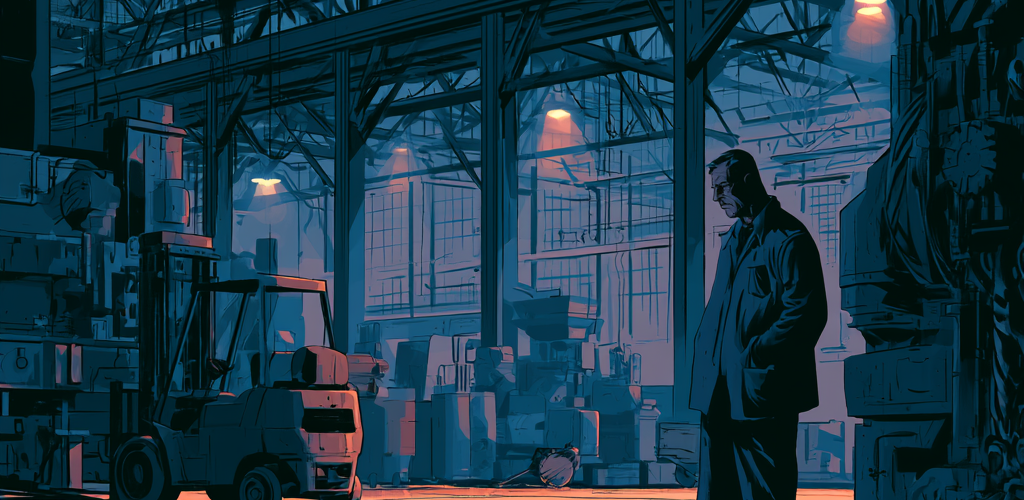
An NLRB administrative law judge has dismissed a case brought on behalf of Marlon Hemmingway, a janitorial worker who spent 14 years cleaning Ford's Dearborn Stamping plant for HPC Industrial Group, a Massachusetts based contractor. Hemmingway was fired in August 2022 after a minor forklift mishap, not for the accident itself, but for refusing to take a post accident drug and alcohol test without his union steward present, a request grounded in so called Weingarten rights, the long established right of unionized workers to representation during interviews that could lead to discipline.
Judge Arthur J. Amchan found that the NLRB's general counsel had shown the firing was at least partly retaliatory, putting the burden on HPC to prove otherwise under the Board's longstanding Wright Line framework. The company could not clear that bar. Yet the judge dismissed the case anyway, concluding that Hemmingway's own union, UAW Local 600, had effectively forfeited his claim. When the union grieved his termination, it never raised the Weingarten issue and ultimately accepted his firing at the third step of the grievance process without protest or a labor board charge of its own.
Applying the Board's "clear and unmistakable waiver" standard, recently revived in the Board's Endurance Environmental Solutions decision, the judge ruled that a union's failure to contest a specific right during grievance proceedings can itself extinguish that right for the individual worker, regardless of why the union chose not to pursue it. The ruling also weighs the Board's 2015 decision in Manhattan Beer Distributors, which had affirmed that workers are generally entitled to representation before post accident drug screening, while distinguishing Hemmingway's case on the grounds that, unlike the worker in that earlier matter, there was no evidence he was impaired.
The decision underscores a recurring tension in labor law: individual workers' statutory rights can be bargained away, or simply left undefended, by the unions meant to protect them, with little recourse for the worker once the grievance process closes.
Key Points
- Hemmingway, a 14 year UAW Local 600 member, was fired after refusing a post accident drug test without a union steward present; no steward was available on his night shift.
- The judge found HPC's stated reasons for the firing did not outweigh the retaliatory motive, satisfying the General Counsel's initial burden under Wright Line.
- The case turned on waiver, not on whether Weingarten rights apply to automatic post accident testing, a question the judge explicitly declined to resolve.
- The union's failure to raise the representation issue during the grievance process, and its acceptance of the termination, was deemed a "clear and unmistakable waiver" of Hemmingway's rights.
- The ruling applied the Board's current waiver standard retroactively, reasoning HPC had not relied on the now overturned "contract coverage" test when it negotiated its drug policy with the union.
- The complaint was dismissed in full; absent exceptions filed with the Board, the ruling becomes final.
Primary Source Author: Arthur J. Amchan, Administrative Law Judge, National Labor Relations Board
Primary Source: HPC Industrial Group, LLC (f/k/a HydroChem Industrial Cleaning, LLC) and Marlon Hemmingway, Case No. 07-CA-308650, JD-37-26 (June 18, 2026)
Primary Source Link: https://www.nlrb.gov/search/case (search docket number 07-CA-308650)