🗞️ The Case That Won't Die: Browning-Ferris and the Decade-Long Battle Over Who's the Boss
The NLRB's April 2026 denial of Browning-Ferris's reconsideration motion closes the book on a 13-year legal odyssey, but the joint employer question it ignited remains as unsettled as ever.

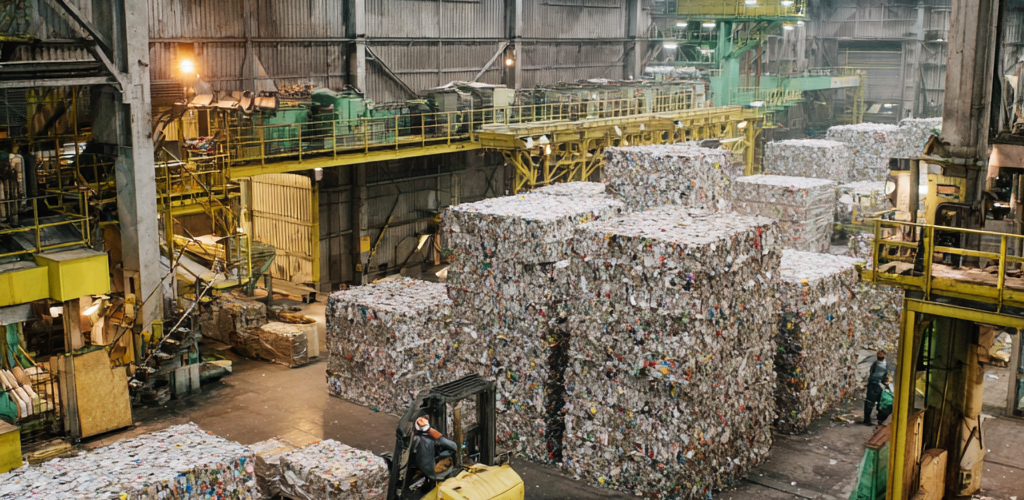
What began as a routine union organizing drive at a California recycling facility in 2013 has since grown into one of the most consequential labor law disputes in recent American history. The case pits Browning-Ferris Industries, a subsidiary of waste management company Republic Services, against a Teamsters affiliate seeking to represent workers supplied through a staffing contractor, Leadpoint Business Services, at BFI's Newby Island Recyclery in Milpitas, California. At the center of the dispute is a deceptively simple question: when a company contracts with a staffing firm to supply its workforce, does that company share legal responsibility as an employer?
The National Labor Relations Board's 2015 decision in Browning-Ferris I said yes. In doing so, the Board departed from three decades of established precedent by expanding the joint employer definition to reach companies that exercise indirect control over contracted workers, or that merely retain the contractual right to control them, even if they never act on it. The ruling drew significant attention from employers, labor groups, and legal scholars alike, and set off nearly a decade of regulatory reversals, appellate court remands, and policy shifts that tracked closely with each change in administration.
The first Trump administration's NLRB moved to overturn the Browning-Ferris framework, reversing it in December 2017 through a decision in Hy-Brand Industrial Contractors. That reversal proved short-lived. The Board vacated Hy-Brand in February 2018 after the agency's inspector general concluded that Member William Emanuel should have recused himself from the case. The conflict arose because Emanuel's former law firm, Littler Mendelson, had represented one of the parties in the underlying Browning-Ferris litigation. With Hy-Brand set aside, the 2015 Browning-Ferris standard was reinstated.
The case then returned to the D.C. Circuit Court of Appeals, which issued a significant ruling in December 2018. The court partially upheld the 2015 decision, affirming that indirect control and reserved authority are relevant factors in a joint employer analysis, but found that the Board had not adequately distinguished between indirect control inherent in ordinary contracting relationships and indirect control over the essential terms and conditions of employment. The court remanded the case to the Board with instructions to redraw that line more clearly.
On remand in July 2020, rather than supply the clarification the court had requested, the Trump-era NLRB concluded that it would be manifestly unjust to apply the 2015 standard retroactively to BFI, citing the company's reasonable reliance on more than three decades of prior precedent requiring direct and immediate control. The Board separately issued a formal rule in 2020 setting that higher bar going forward. The D.C. Circuit, however, was not persuaded. In July 2022, the court reversed the Board's 2020 decision, finding that the retroactivity analysis was flawed and that the Board had overstated how settled the pre-2015 standard actually was. The court remanded the case once more, this time directing the Board to apply the clarified 2015 framework as the law of the case.
The Biden administration attempted to codify the broader framework through a 2023 rulemaking that would have restored a Browning-Ferris-style standard across all future cases. A federal judge in Texas vacated that rule in March 2024, finding it both contrary to law and arbitrary, before it ever took effect. Nonetheless, the D.C. Circuit's 2022 remand instructions remained operative. The NLRB complied on February 23, 2026, reaffirming that BFI is a joint employer of Leadpoint's workers under the clarified 2015 standard and ordering it to bargain with the Teamsters. BFI sought reconsideration, arguing that any resulting bargaining obligation should extend only to the specific employment terms the company demonstrably controls. On April 8, 2026, the Board rejected that argument, holding that the scope of what a joint employer must bargain over is a legally distinct question not before the Board in this proceeding.
The resolution arrived in an unusual context. Just three days after the February 2026 ruling reaffirming BFI's joint employer status, the second Trump administration's NLRB formally reinstated the narrow 2020 rule, effective immediately, and stated explicitly that the Browning-Ferris outcome has no application to cases arising under that standard. The BFI result was a court-directed endpoint for one long-running dispute, not a signal of any broader policy direction.
The case illustrates how the legal definition of joint employment has functioned less as settled doctrine than as a recurring policy question, one that each administration has answered differently. Those who favor a broader standard argue that it appropriately holds accountable the companies that direct and benefit from contracted labor, even when that direction is exercised indirectly. Those who favor a narrower standard argue that it better reflects the practical boundaries of third-party contracting relationships and provides employers with clearer, more predictable rules. The current governing standard reflects the latter view, though the case's history suggests that may not be a permanent state of affairs.
Key Points
- 2013: A Teamsters affiliate petitioned to represent Leadpoint workers at BFI's Milpitas, California facility, contending BFI and Leadpoint were joint employers.
- 2015 (BFI I): The NLRB found BFI to be a joint employer, departing from prior precedent to include companies exercising indirect or reserved control over contracted workers.
- December 2017: The first Trump NLRB reversed the Browning-Ferris standard via Hy-Brand Industrial Contractors.
- February 2018: Hy-Brand was vacated after the Board's inspector general found that Member William Emanuel, whose former law firm had represented a party in the Browning-Ferris litigation, should have recused himself.
- December 2018: The D.C. Circuit partially affirmed the 2015 standard but remanded the case, directing the Board to better define the role of indirect control in the joint employer analysis.
- 2020: The Trump NLRB declined to apply the 2015 standard retroactively to BFI, citing manifest injustice, and issued a formal rule requiring "substantial direct and immediate control" for all future cases.
- July 2022: The D.C. Circuit reversed the Board's 2020 retroactivity ruling and remanded the case again, instructing the Board to apply the clarified 2015 standard as the law of the case.
- 2023: The Biden NLRB issued a new rule seeking to restore a broader joint employer standard; a federal court vacated it in March 2024 before it took effect.
- February 23, 2026: Pursuant to the D.C. Circuit's 2022 instructions, the NLRB reaffirmed BFI as a joint employer, expressly limiting the holding to the facts of this case.
- February 26, 2026: The second Trump NLRB formally reinstated the narrow 2020 rule, leaving the BFI outcome as a case-specific result with no broader precedential weight.
- April 8, 2026: The NLRB denied BFI's motion for reconsideration, confirming BFI must bargain with the Teamsters under standard bargaining order terms.
- The joint employer standard remains one of the most actively contested areas of American labor law, with its governing definition shifting in step with each successive administration.
Primary Source Author: NLRB Chairman James R. Murphy, with Members David M. Prouty and Scott A. Mayer
Primary Source: Browning-Ferris Industries of California, Inc. d/b/a BFI Newby Island Recyclery, 374 NLRB No. 93 (April 8, 2026), Order Denying Motion for Reconsideration
Primary Source Link: 374 NLRB No. 93, NLRB.gov
Supplemental Links
- NLRB Reaffirms BFI as Joint Employer, Bloomberg Law (Feb. 24, 2026)
- BFI Is Back. Again., Labor Relations Ink (Feb. 25, 2026)
- NLRB Applies BFI Standard at Court's Direction, HR Dive (Feb. 24, 2026)
- NLRB Reverts to 2020 Trump Joint Employer Rule, HR Dive (Feb. 26, 2026)
- NLRB Reinstates Narrower Joint Employer Standard, Sullivan & Cromwell (March 3, 2026)
- DOL and NLRB Hit Rewind on Worker Classification, Duane Morris (March 3, 2026)
- Labor Board Makes Business-Friendly Rule Official, Fisher Phillips (March 2, 2026)
- Browning-Ferris Returns: NLRB Proposes Broader Rule, Jackson Lewis (2022)
- The NLRB's Browning-Ferris Decision Explained, National Employment Law Project (2015)
- NLRB Overturns BFI, Says Company Not a Joint Employer, HR Dive (Aug. 2020)