🗞️ Supply Chain Shield: Labor Department Rolls Out Four New Tools to Combat Foreign Labor Abuse
The U.S. Department of Labor launched four voluntary self-assessment tools to help businesses identify forced labor risks in global supply chains and comply with federal import law.
The U.S. Department of Labor moved Wednesday to give American companies a new set of tools to identify forced labor risks in their global supply chains, releasing four voluntary resources that officials say will help businesses comply with federal import law and protect domestic workers from unfair foreign competition.
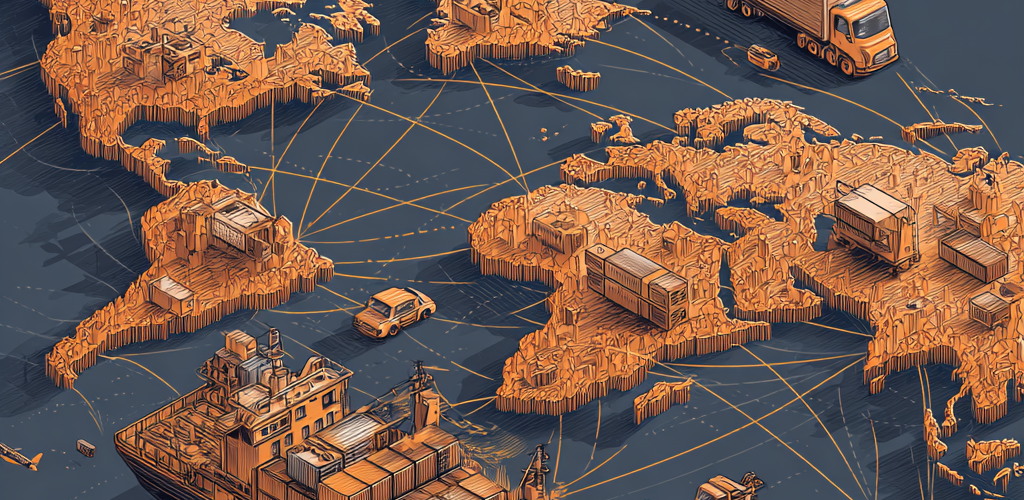
The announcement, made at an event co-hosted by the Responsible Business Alliance, is part of a sustained federal effort to address labor abuses in international supply chains. The four tools, developed by the department's Bureau of International Labor Affairs, are designed to work in concert: LaborShield, a mobile app cataloguing labor violations in more than 145 countries; ImportWatch, which cross-references federal labor research with Census Bureau trade data to flag high-risk goods; SourcingStrong, a due-diligence framework for building internal compliance systems; and a Supply Chain Traceability Portal intended to give companies visibility beyond their immediate suppliers into deeper tiers of their sourcing networks.
The rollout arrives at a moment of heightened federal scrutiny of supply chains. Since the Uyghur Forced Labor Prevention Act was signed into law on December 23, 2021, and its rebuttable presumption took effect in June 2022, U.S. Customs and Border Protection has reviewed more than 18,000 shipments valued at roughly $3.81 billion. Detention volumes climbed more than 50 percent in fiscal year 2025 compared with the prior year, and the release rate for shipments stopped under the law fell to approximately 6.5 percent in FY 2025, reflecting a tightening evidentiary standard that many importers are finding difficult to meet.
What began as an enforcement regime focused primarily on cotton and solar panels has since spread across the industrial economy. Federal authorities designated lithium, copper, steel, caustic soda, and red dates as high-priority sectors for fiscal year 2026, a list that implicates supply chains running through the automotive, electronics, and energy storage industries. The underlying legal standard requires importers to demonstrate with "clear and convincing evidence" that their goods contain no forced-labor inputs, a burden that applies regardless of where final assembly took place.
The new tools arrive alongside a parallel trade action that could further raise the stakes for importers. In March 2026, the Office of the United States Trade Representative opened Section 301 investigations into whether 60 of America's largest trading partners adequately enforce their own forced-labor import bans. If those investigations yield findings of unreasonable or discriminatory practices, the result could be additional tariffs layered on supply chains already under UFLPA scrutiny.
The Labor Department's tools carry no binding legal force and create no new obligations for businesses. For companies that have yet to map their supply chains beyond the first tier, however, the trajectory of CBP enforcement suggests the practical cost of inaction is increasing.
Key Points
- The DOL launched four free, voluntary tools on April 8, 2026: LaborShield (mobile app), ImportWatch (import risk resource), SourcingStrong (due diligence builder), and a Supply Chain Traceability Portal.
- The tools are designed to help businesses comply with U.S. law banning imports made with forced labor, anchored by the UFLPA signed into law on December 23, 2021, with enforcement beginning June 2022.
- CBP shipment detentions under the UFLPA rose more than 50 percent in FY 2025; the release rate for detained goods in FY 2025 fell to approximately 6.5 percent.
- Enforcement has expanded well beyond apparel and solar panels to include lithium, copper, steel, automotive components, and electronics.
- A March 2026 USTR Section 301 investigation into 60 trading partners could layer additional tariffs on supply chains already under UFLPA scrutiny.
- Importers bear the burden of proving, with clear and convincing evidence, that their goods are free of forced labor inputs, even if manufactured outside of Xinjiang.
- Multi-tier supply chain risk is increasingly the central compliance challenge; a product assembled in Vietnam or Mexico remains subject to detention if upstream inputs trace to prohibited entities.
Primary Source Author: U.S. Department of Labor, Bureau of International Labor Affairs (ILAB)
Primary Source: US Department of Labor launches new tools to help businesses strengthen supply chains, stop unfair foreign labor practices
Primary Source Link: https://www.dol.gov/newsroom/releases/ilab/ilab20260408
Supplemental Links
- DOL ILAB Business Self-Assessment Tools Overview
- DHS 2025 Updates to the UFLPA Strategy
- USTR: Forced Labor Enforcement Task Force, 2025 UFLPA Strategy Release
- Troutman Pepper: Key Updates to the 2025 UFLPA Strategy
- Arnall Golden Gregory: USTR Section 301 Forced Labor Investigations, April 2026
- Troutman Pepper: UFLPA Enforcement on Lithium-Ion and Energy Storage Imports