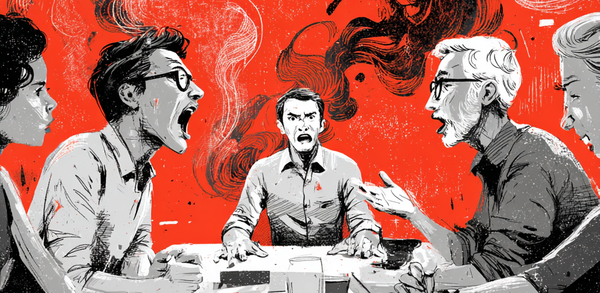
🗞️ Silenced at the Hiring Hall: How ILA Local 1694 Used a Longshoreman's Livelihood to Punish His Dissent
The NLRB found ILA Local 1694 violated federal labor law by systematically blocking a dissident worker from job referrals in retaliation for writing complaint letters to union leadership, ruling that walking away was entirely reasonable.


On April 7, 2026, the National Labor Relations Board ruled that ILA Local 1694 had weaponized its control over a union hiring hall to silence a worker who dared to complain in writing to union leadership. The decision, International Longshoremen's Association Local 1694, AFL–CIO (GT USA Wilmington, LLC), 374 NLRB No. 90, found the union had committed multiple violations of federal labor law against Standford Fowler, a longshore worker at the Port of Wilmington, Delaware.
Fowler's story is one that labor lawyers say plays out more often than the public realizes. A member of the now-dissolved ILA Local 1694-1, he sought a routine transfer to Local 1694 in order to access superior health benefits negotiated under the so-called "Blue Book" collective bargaining agreement. Local 1694 President William Ashe refused, directing Fowler to earn his way in through the standard multi-year process of accumulating work hours at the hiring hall. Fowler obliged and began working his way through the queue.
The relationship turned adversarial in March 2021, when Fowler wrote to ILA International Secretary-Treasurer Stephen Knott raising concerns about a pending merger of local unions and noting that Ashe had blocked his direct transfer request. Knott forwarded the letter directly back to Ashe and asked him to investigate. The response was swift and, according to the Board, unlawful. Ashe and union Vice President James Glandton publicly confronted Fowler at the hiring hall, dressing him down for contacting the International and making clear there would be consequences. Glandton told Fowler plainly that because of the letter, he would no longer be allowed to seek work at the hall.
What followed was a sustained, methodical campaign to deny Fowler steady employment. Over roughly a year, Ashe intervened some 20 times at the hiring hall, stepping in at the moment gang bosses were about to select Fowler for a job and blocking the hire. The union's defense was that it was simply enforcing the Blue Book's Craft Interchange Agreement, which required workers to seek jobs in their own craft jurisdiction before crossing into another. The Board found that explanation to be pretextual: the Craft Interchange Agreement had never applied to former Local 1694-1 members, a fact the union's own representative confirmed under oath.
In February 2022, Ashe sent Fowler a letter indicating he was once again welcome to seek work at the hall. Within days of his return, Fowler was involved in a minor vehicle incident on the job, prompting his employer, GT USA, to place him on a standard administrative suspension pending investigation. Fowler was never notified of that suspension. On March 5, union Vice President Michael Miller encountered Fowler at the port while he was working a valid assignment for a different employer entirely, called security, declared Fowler "banned from the Port," and had him escorted off the premises. GT USA's own chief operating officer later testified that no such ban existed and that the company had no authority to bar workers from other employers' jobs.
Fowler never returned to the hiring hall. Administrative Law Judge Susannah Merritt found violations through March 5 but dismissed the allegation that the union's refusal to refer Fowler continued after that date, concluding that Fowler had simply chosen to stop showing up. The full Board reversed that conclusion. Citing a well-established principle in labor law that workers cannot be required to perform a futile act, the Board found that Fowler had every reasonable basis to believe that further attempts to seek referrals would be thwarted. The union had blocked him for a year, falsely declared him banned from the port, withheld a grievance he had filed for two months, and never once clarified the actual terms of his GT USA suspension. The Board also rejected the judge's view that Fowler's decision to pursue an NLRB charge, rather than participate in a belated union grievance hearing, showed that he had given up on working. Inferring abandonment from the act of filing a legal complaint, the Board wrote, would be contrary to the purposes of the Act itself.
As a remedy, the Board ordered Local 1694 to inform Fowler in writing that referrals are available to him, make him financially whole for lost wages and other direct pecuniary harms dating back to March 2021, and expunge related records. In a step that labor practitioners note is relatively uncommon, the Board also required the union to read the remedial notice aloud at a membership meeting, citing the seriousness and duration of the violations and the involvement of the union's most senior officials.
Key Points
- Dissident union activity is protected under Section 7 of the NLRA. Workers have the right to criticize union leadership, raise internal concerns, and write letters to parent organizations without facing employment retaliation.
- Exclusive hiring halls carry a strict duty of fair representation. A union operating an exclusive referral system cannot deny job referrals for arbitrary or discriminatory reasons unrelated to dues nonpayment.
- The Wright Line burden-shifting framework governs. The General Counsel must show protected activity, union knowledge, and resulting animus; the burden then shifts to the union to prove it would have acted identically regardless.
- Pretextual justifications defeat the union's defense. Local 1694 claimed it was enforcing a neutral contract provision that, as its own witness confirmed, had never applied to the workers in question.
- The futility doctrine extends the violation period. When a union's pattern of unlawful conduct gives a worker reasonable grounds to believe further referral attempts will fail, the law treats the refusal as ongoing even without a formal request.
- False statements that create ambiguity can themselves constitute a violation. Miller's declaration that Fowler was banned, combined with the union's silence on the actual terms of his suspension, foreseeably discouraged him from returning.
- Pursuing an NLRB charge is not evidence of abandoning employment. The Board rejected any inference that filing a legal complaint signals a worker has chosen to stop seeking work.
- A public notice reading was ordered as an enhanced remedy. Given the seriousness, duration, and senior-level nature of the violations, the Board required the notice to be read aloud at a union meeting before members.
- Backpay covers the full violation period from March 2021 forward, including reasonable job-search expenses, with daily compounded interest.
Primary Source Author: Chairman James R. Murphy, Member David M. Prouty, and Member Scott A. Mayer (National Labor Relations Board)
Primary Source: International Longshoremen's Association Local 1694, AFL–CIO (GT USA Wilmington, LLC), 374 NLRB No. 90 (April 7, 2026)
Primary Source Link: https://www.nlrb.gov/case/04-CB-280810
Supplemental Links
- NLRB: Section 8(b)(1)(A) — Coercion of Employees
- NLRB: Section 8(b)(2) — Causing Employer Discrimination
- NLRB: The National Labor Relations Act (Full Text)
- NLRB: What's the Law? (Union Unfair Labor Practices)
- Cornell LII: NLRB v. Transportation Management Corp., 462 U.S. 393 (1983)
- Cornell LII: Unfair Labor Practices Overview
- Labor Relations Update: NLRB Clarifies Wright Line Burden-Shifting Framework