🗞️ IT Workers at an Army Test Range Win the Right to a Union Vote
Federal labor regulators ordered a union election for 11 system administrators at the U.S. Army Yuma Proving Ground, rejecting the employer's efforts to block the vote by classifying the workers as professionals or confidential employees.

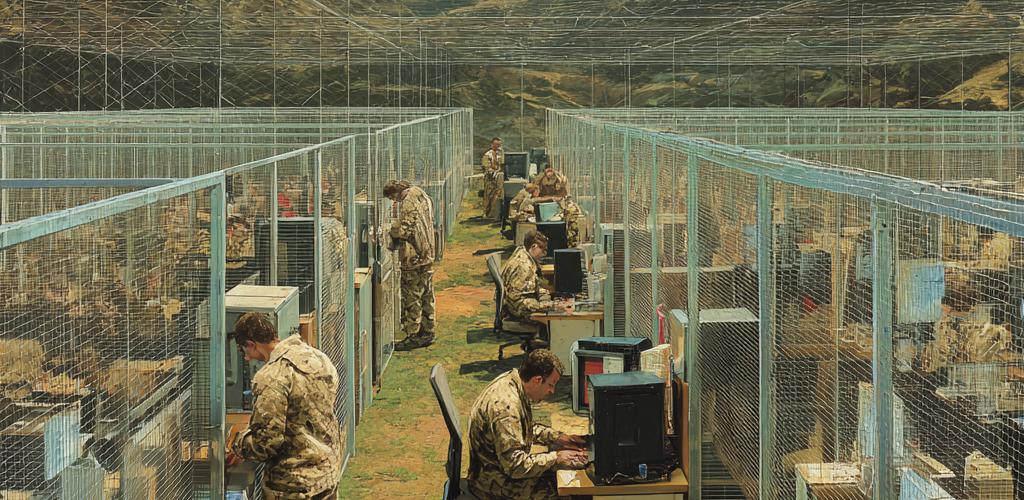
On May 6, 2026, Cornele A. Overstreet, Regional Director of the National Labor Relations Board's Region 28, issued a Decision and Direction of Election ordering a secret ballot vote for 11 system administrators employed by Trax International Corporation at the U.S. Army Yuma Proving Ground in Yuma, Arizona.
The International Association of Machinists and Aerospace Workers, Local Lodge SC3311, filed the petition in November 2025, seeking to add the system administrators to an existing bargaining unit of approximately 700 employees represented by the IAM at the same facility. The union pursued the matter through an Armour-Globe self-determination election, a procedural mechanism by which unrepresented workers vote on whether to join an existing bargaining unit rather than form an entirely new one.
Trax International, a Nevada-based federal contractor that holds a $727 million Army test support contract at the proving ground, challenged the petition on multiple grounds. The company argued that the system administrators were either professional employees, a classification that would have required a separate unit determination before they could be placed in any mixed bargaining unit, or confidential employees, which would have removed them from the Act's protections entirely. The company also contended the workers had insufficient common ground with the existing bargaining unit to be appropriately included. All three arguments were rejected.
On the professional employee question, the Regional Director found that while the system administrators perform technical work, including network monitoring, patch deployment, and cybersecurity compliance, their tasks are carried out within established protocols and approved tools rather than through the kind of independent, intellectually driven judgment that the National Labor Relations Act requires for professional status. Critically, the positions do not uniformly require a college degree. Applicants may qualify through a high school diploma combined with military training, relevant work experience, or industry certifications such as CompTIA Security+. Under settled Board precedent, roles that permit qualification through experience or technical training in lieu of formal academic study do not satisfy the advanced-knowledge standard set out in Section 2(12) of the Act.
The confidential employee argument fared no better. The Board's standard requires a demonstrated connection between the employee and labor relations decision-making, not merely access to sensitive business information. Although the system administrators could view billing records, invoicing data, and government performance evaluations through the systems they maintained, the record showed they had no role in grievance proceedings, no reporting relationship with human resources or labor relations officials, and no access to collective bargaining strategy or disciplinary materials. That factual record left the employer's argument short of the legal threshold.
The community of interest analysis, which the Regional Director acknowledged presented the closer question, ultimately came out in the union's favor. Factors supporting inclusion were substantial: the system administrators maintain the same computer systems that bargaining unit employees rely on daily, help desk workers routinely escalate unresolved technical issues to the administrators, and all employees in both groups ultimately fall under the same department manager. Factors weighing against inclusion, including separate direct supervisors, different compensation structures (the administrators are salaried and exempt under the Fair Labor Standards Act, while bargaining unit members are hourly employees whose wages are set by collective bargaining agreement and Department of Labor wage determinations), and the absence of any cross-utilization of duties, were real but not determinative. The Board does not require that workers be identical in their employment conditions, only that they share a sufficient community of interest for a combined unit to be appropriate.
The election is scheduled for May 27, 2026, at Building 2535 at the Yuma Proving Ground, with voting windows in the early morning and at midday to accommodate shift workers. The employer was required to file a voter eligibility list with the Regional Director by May 8, 2026.
If the system administrators vote in favor of representation, they would join the IAM unit at the facility, where the union has held bargaining rights since approximately 2016. A separate IAM local, Local Lodge SC310, represents the broader existing bargaining unit at Yuma and ratified a new three-year contract in 2024 that included wage increases of 4.9%, 4%, and 3.75% over its duration.
Key Points
- The NLRB's Region 28 ordered a union election for 11 system administrators at the U.S. Army Yuma Proving Ground, rejecting Trax International's efforts to block the petition on professional employee, confidential employee, and community of interest grounds.
- The employer argued the workers qualified as professional employees under Section 2(12) of the National Labor Relations Act, but the Regional Director found their duties, including patch deployment, network monitoring, and cybersecurity compliance, constituted skilled technical work performed within established procedures, not the independently intellectual work the statute contemplates.
- The confidential employee claim also failed. Access to billing and financial data does not satisfy the Board's labor-relations nexus test absent a demonstrated connection to grievance handling or collective bargaining matters.
- The community of interest finding turned largely on functional integration: both groups work within the same systems environment, help desk employees regularly escalate unresolved technical issues to the system administrators, and both groups share the same department manager.
- The election is set for May 27, 2026. A vote in favor of representation would bring the 11 system administrators into an existing IAM bargaining unit of approximately 700 employees at the same facility.
- Trax International holds a $727 million follow-on Army contract at Yuma, where it supports more than 400 test and evaluation events annually with a workforce of more than 900 personnel.
- Either party may file a request for review with the full Board within 10 business days of final disposition of the proceeding by the Regional Director. Filing such a request does not automatically stay the election.
Primary Source Author: Cornele A. Overstreet, Regional Director, NLRB Region 28
Primary Source: Decision and Direction of Election, Trax International Corporation, Case 28-RC-375549 (NLRB Region 28, May 6, 2026)
Primary Source Link: NLRB Case 28-RC-375549
Supplemental Links:
- National Labor Relations Act, NLRB
- NLRB Election Procedures, Wikipedia
- Armour-Globe Doctrine, NLRB v. Raytheon Co., 918 F.2d 249 (1st Cir. 1990)
- TRAX International, Yuma Proving Ground Operations
- TRAX Wins $727M Army Contract at Yuma, The Defense Post
- IAM Local SC310 Members Ratify New Contract at TRAX, IAMAW