🗞️ Housekeepers, a Hotel Sale, and a Targeted Layoff: How a New Jersey Marriott Franchise Lost Its Labor Fight
The NLRB ruled two successive owners of a Parsippany, NJ Fairfield Inn violated federal labor law by targeting pro-union workers, ordering reinstatement, back pay, and mandatory bargaining.
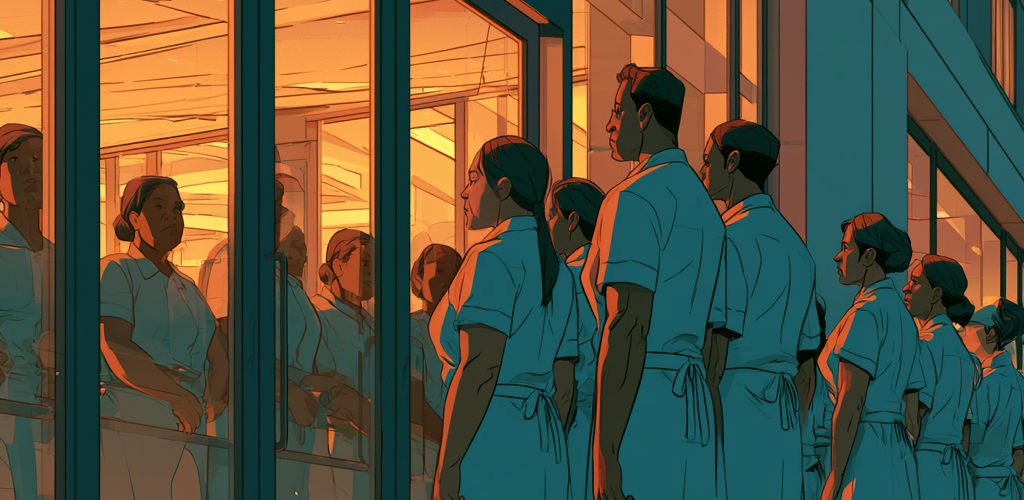
When a Parsippany, New Jersey Fairfield Inn & Suites changed hands in the summer of 2023, the ownership transition looked routine. It was anything but.
On June 4, 2026, the National Labor Relations Board issued a sweeping decision finding that both the hotel's former operator, JSK Parsippany, LLC, and its successor, Fairfield Parsippany, LLC, had separately violated federal labor law in ways that together stripped a group of hotel housekeepers and maintenance workers of their union representation. The ruling, spanning seven consolidated cases, confirmed violations of Sections 8(a)(1), 8(a)(3), and 8(a)(5) of the National Labor Relations Act, affecting a bargaining unit of housekeepers, maintenance technicians, breakfast hosts, and housemen represented by the Hotel and Gaming Trades Council, AFL-CIO.
The story begins with JSK, owned by Peter Patel, whose stated goal from the outset was to decertify the union. According to testimony from a former general manager, Patel characterized pro-union employees as "red" and anti-union employees as "green," directing management to track which workers fell into which camp. In April 2022, JSK brought in a housekeeping supervisor who told the general manager she had been hired to recruit anti-union workers and proceeded to do so, adding nine new bargaining unit members over the following months. A decertification petition that followed was dismissed by the NLRB regional office in August 2023 after investigators found the bargaining unit had been unlawfully packed.
JSK sold the hotel's assets to Fairfield Parsippany in July 2023, with the operational handover occurring on August 19. The day before, JSK terminated the six most senior, openly pro-union employees, handing them notices at the end of their final shifts. Fairfield retained the same general manager who had overseen operations under JSK. When Fairfield then hired the six terminated workers on August 22, four days after their termination, it did so only after the union notified Fairfield that New Jersey's Hotel Worker Retention Statute obligated it to retain them. Fairfield designated the workers as probationary employees subject to a 90-working-day review period. By December 8, 2023, all six were terminated again, with management telling them a new outside cleaning company would be handling their work.
The Board found that explanation difficult to square with the facts. The cleaning company in question, Hotel Cleaning Services, LLC, had been incorporated on August 17, 2023, two days before Fairfield took over the hotel, and was formed by the same housekeeping supervisor who had been brought in by JSK to hire anti-union workers. When the cleaning contract became operational in late December, it absorbed all of the bargaining unit employees who had not been among the six pro-union workers. Those six were not called back.
The Board applied the NLRB v. Burns International Security Services successorship framework to find that Fairfield inherited JSK's obligation to recognize and bargain with the union. Because Fairfield had not established its own employment terms before the union made a formal recognition demand on August 21, 2023, it was required to maintain the status quo established under JSK's expired collective-bargaining agreement. It failed to do so on nearly every front: refusing to recognize the union, ceasing dues checkoff, blocking union representatives from the premises, refusing to reinstate a housekeeper returning from pregnancy-related medical leave, and withholding basic information the union had formally requested.
In a separate finding, the Board held that Fairfield's attorney violated Section 8(a)(1) by interviewing employee witnesses before the hearing without providing the assurances required under Johnnie's Poultry Co., 146 NLRB 770 (1964), a well-established rule requiring employers to inform employees that participation in such interviews is voluntary and that no reprisals will follow from either their participation or their answers.
Fairfield argued it was not a successor at all, pointing to an indemnification agreement it had signed with JSK as a contractual shield against liability. The Board rejected that argument, reaffirming settled precedent that private agreements cannot limit the NLRB's authority to remedy unfair labor practices in the public interest. The Board also found that the New Jersey Hotel Worker Retention Statute did not affect the successorship analysis, because the record showed Fairfield chose to hire a majority of JSK's employees independent of what the statute required.
The remedies ordered are extensive. Both companies must offer immediate reinstatement to seven affected employees, the six who were refused hire and terminated plus a seventh housekeeper who was denied reinstatement after medical leave, and pay back wages with interest compounded daily. Fairfield must also remit unpaid union dues to the union, restore the pre-takeover employment terms pending good-faith bargaining to agreement or impasse, and furnish the union with information it had requested and never received. JSK and Fairfield are held jointly and severally liable for JSK's violations.
Key Points
- JSK's owner directed management to classify workers as pro-union ("red") or anti-union ("green") and to direct employees to interrogate coworkers about union sympathies; those findings were deemed admitted after JSK failed to file an answer or appear at the hearing.
- JSK terminated the six most senior pro-union workers on August 18, 2023, the day before the hotel changed hands, and Fairfield declined to hire them when it began operations on August 19.
- Fairfield hired the six workers on August 22, four days after their termination, only after the union cited New Jersey's Hotel Worker Retention Statute; all six were then terminated again on December 8, 2023.
- The cleaning company used to justify the December terminations was incorporated two days before Fairfield took over, was formed by JSK's former housekeeping supervisor, and absorbed the remaining bargaining unit employees while excluding all six pro-union workers.
- Fairfield hired nine of JSK's fifteen bargaining unit members at the outset, retaining all of JSK's anti-union hires while excluding the six most senior openly pro-union workers.
- The general manager who carried out operations under JSK was retained by Fairfield in the same role; his knowledge of prior unfair labor practices was legally imputed to Fairfield.
- Fairfield's private indemnification agreement with JSK provided no shield against the NLRB's remedial authority.
- The Board found an additional violation for Fairfield's attorney conducting pre-hearing witness interviews without informing employees that participation was voluntary and would carry no reprisals.
- JSK and Fairfield are held jointly and severally liable for JSK's violations, with remedies including reinstatement for seven workers and back pay with compounded daily interest.
Primary Source Author: Administrative Law Judge Susannah Merritt (initial decision, November 19, 2024); Chairman James R. Murphy and Members David M. Prouty and Scott A. Mayer (final Board decision, June 4, 2026)
Primary Source: JSK Parsippany, LLC d/b/a Fairfield Inn & Suites by Marriott and Fairfield Parsippany, LLC d/b/a Fairfield Inn & Suites by Marriott as its Successor, 374 NLRB No. 124 (June 4, 2026)
Primary Source Link: https://www.nlrb.gov/case/22-CA-305280
Supplemental Links
- Bloomberg Law: New Jersey Hotel's Union Busting Illegal, Labor Board Judge Says (November 19, 2024)
- NLRB v. Burns International Security Services, 406 U.S. 272 (1972), Justia
- Fall River Dyeing & Finishing Corp. v. NLRB, 482 U.S. 27 (1987), Justia
- Ogletree Deakins: NLRB and Burns Successorship Analysis and Worker Retention Laws
- New Jersey Hotel Worker Retention Statute, N.J. Stat. Ann. § 29:4-13
- Weinberg Roger & Rosenfeld: NLRB Clarifies Burden of Proof Under Wright Line
- Hotel and Gaming Trades Council, AFL-CIO