🗞️ Federal Labor Board Orders Postal Service to Rewrite Nationwide Solicitation Rules
The NLRB ruled that the U.S. Postal Service violated federal labor law by maintaining an overbroad petition ban and removing a worker's safety flyers, ordering policy revisions and nationwide notice distribution across more than 30,000 facilities.

The National Labor Relations Board has ruled that the United States Postal Service maintained a workplace policy that unlawfully restricted employees from circulating petitions and posting safety-related materials, a decision that carries implications not only for postal workers but for public employers broadly who rely on similarly worded conduct rules.
The Board, in a decision issued June 11, 2026, affirmed findings by Administrative Law Judge Michael A. Rosas that the Postal Service violated Section 8(a)(1) of the National Labor Relations Act in two distinct respects. First, a longstanding provision in the Postal Operations Manual that prohibited "collecting signatures on petitions, polls, or surveys" on USPS property was found to unlawfully chill employees' rights to organize and engage in concerted activity, rights protected under Section 7 of the Act. Second, management at the Merrifield, Virginia, processing and distribution center acted unlawfully when supervisors ordered employee David Covarrubias to remove flyers he had posted on a community bulletin board documenting workplace safety hazards and encouraging coworkers to report similar concerns.
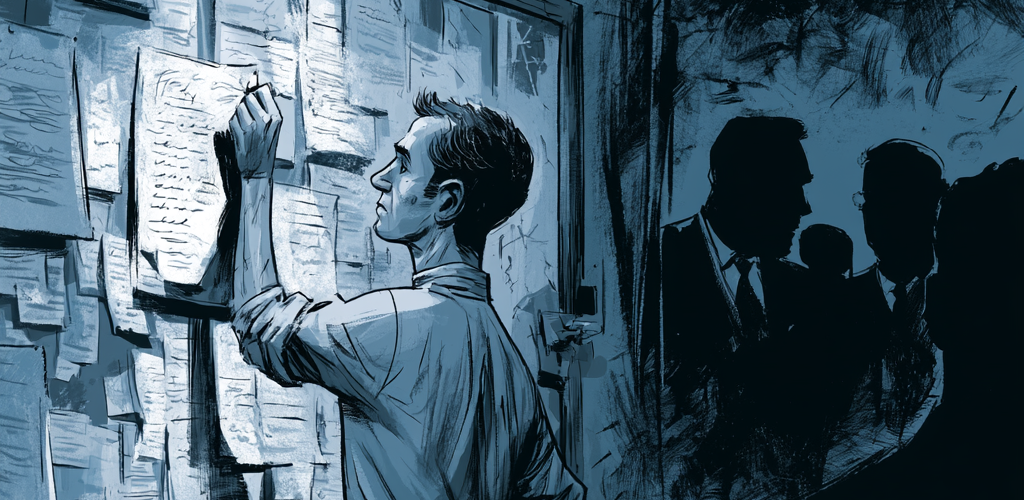
Covarrubias, a 36-year postal employee and former union shop steward, had documented a range of safety issues across Northern Virginia postal facilities, including broken dock equipment, chemical exposure risks, and hazardous floor conditions, and posted two flyers in a breakroom asking coworkers to contact him directly. Management removed the flyers, citing the agency's solicitation policy. The Board found that action to be discriminatory: nonwork materials such as notices for retirement parties and items for sale had been permitted to remain on the same bulletin board without objection.
The Postal Service raised several defenses, each of which the Board rejected. The agency argued that the NLRB lacked jurisdiction to review postal regulations. The Board countered that Congress explicitly brought USPS labor relations within the scope of the Act through the Postal Reorganization Act of 1970. The Postal Service also contended that the union had effectively waived employees' rights by incorporating the solicitation rule into the collective bargaining agreement. The Board found no such waiver, holding, consistent with longstanding Supreme Court precedent, that any relinquishment of statutory rights must be "clear and unmistakable," a standard the contract language did not meet.
Applying the framework established in Stericycle, Inc., 372 NLRB No. 113 (2023), which placed the burden on employers to demonstrate that challenged rules serve a legitimate and substantial business interest that cannot be achieved through a more narrowly tailored policy, the Board found the USPS solicitation rule presumptively unlawful. Critically, the rule made no distinction between working and nonworking hours, a deficiency that has long rendered blanket solicitation prohibitions legally vulnerable under established labor law dating to Republic Aviation Corp. v. NLRB, 324 U.S. 793 (1945).
The Board's order is broad in scope. The Postal Service must rescind or revise the signature-collection prohibition, notify all employees in writing of that change, and distribute a formal NLRB notice electronically through its internal communications platform, Lite Blue, as well as by email, reaching workers at all of its more than 30,000 facilities nationwide. A separate notice addressing the bulletin board violation must be posted and distributed specifically to employees at the Merrifield facility. The agency has 21 days from the date of service to file a sworn certification of compliance with the NLRB's Region 5 office.
Key Points
- The NLRB ruled that the USPS policy banning signature collection on petitions, polls, and surveys on postal property was overbroad and violated employees' Section 7 rights under the National Labor Relations Act
- A 36-year postal worker in Merrifield, Virginia, was unlawfully ordered to remove safety-related flyers from a community bulletin board after management characterized the posting as prohibited solicitation
- The USPS argument that the NLRB lacked jurisdiction over postal regulations was rejected; Congress explicitly brought USPS labor relations under the NLRA through the Postal Reorganization Act of 1970
- The Board applied the Stericycle standard (2023), which requires employers to demonstrate that challenged workplace rules serve a legitimate business interest that cannot be achieved through a more narrowly written policy
- The union's incorporation of the solicitation rule into the collective bargaining agreement did not constitute a valid waiver of employees' statutory rights, absent clear and unmistakable contractual language
- The solicitation rule's failure to distinguish between working and nonworking hours was independently fatal to its legality under NLRB precedent established in Republic Aviation Corp. v. NLRB (1945)
- USPS is required to distribute a remedial notice electronically to employees at all facilities nationwide; given the scale of its operations, the Board accepted electronic distribution in lieu of physical posting at each of its more than 30,000 locations
Primary Source Author: Administrative Law Judge Michael A. Rosas (initial decision); affirmed by Chairman James R. Murphy and Members David M. Prouty and Scott A. Mayer
Primary Source: United States Postal Service and David Covarrubias, 374 NLRB No. 132, Case 05-CA-287508 (June 11, 2026)
Primary Source Link: http://www.nlrb.gov/case/05-CA-287508
Supplemental References
- NLRB: Board Adopts New Standard for Assessing Lawfulness of Work Rules (Stericycle)
- Littler: NLRB Adopts Tough New Standard for Workplace Rules
- Ogletree: NLRB Adopts Standard Critical of Employer Workplace Rules and Handbooks
- Davis Wright Tremaine: NLRB's Stericycle Decision and What It Means for Employer Workplace Policies
- Ruralinfo.net: NLRB Rules USPS Violated Labor Law by Banning Signatures and Safety Flyers
- 21cpw.com: NLRB Calls USPS Signature Collection Rule Unlawful